All things in nature have a reason for being. Today’s common sense may not be common sense tomorrow.
At Senju Pharmaceutical, we are dedicated not only to our original R&D initiatives but also to R&D projects involving global joint studies and collaboration with industry, government, and academia by leveraging flexible ideas and thinking beyond conventional frameworks and preconceptions. Our mission is to look toward the future and swiftly deliver innovative drugs that are truly needed by patients suffering from diseases.
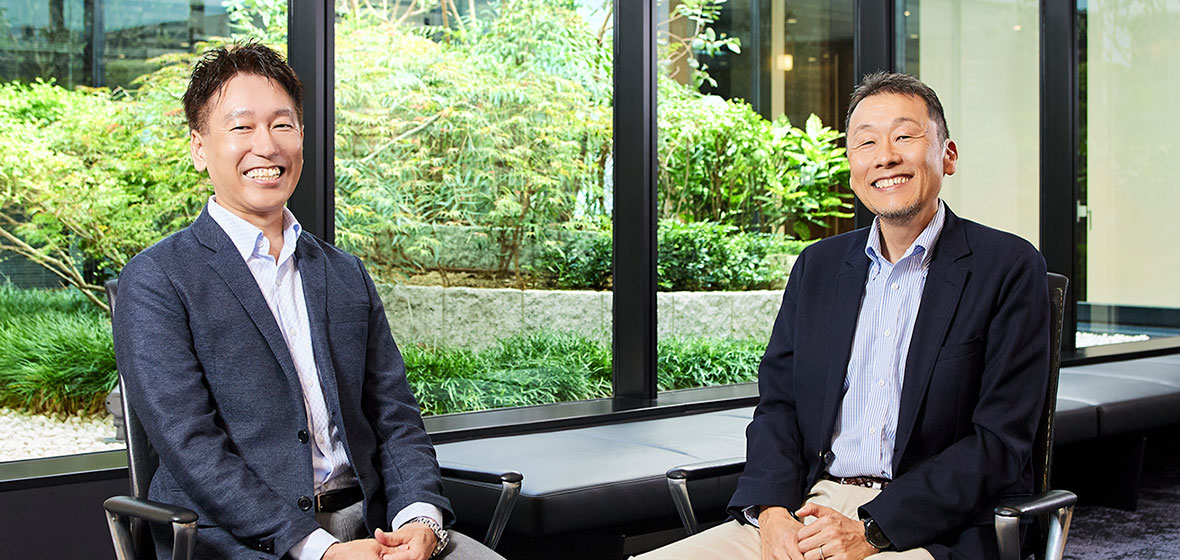
Hideki Tokushige, Executive Officer, General Manager, Drug Discovery Research Division / Takuro Sekiya, Executive Officer, General Manager, Research and Development Division
Message from Research and Development Division
To realize our company’s vision, which is “To provide care that is effective for the five senses of people worldwide,” our R&D teams (the Drug Discovery Research Division and the Research and Development Division) are committed to “persistently creating and providing original, high-quality pharmaceutical products that are effective for everyone’s five senses through unique concepts and world-class research and development capabilities.”
Drugs can be classified as “First in Class” or “Best in Class” based on their mechanisms of action and clinical value. In our vision, “First in Class” products are defined as “groundbreaking products with excellent efficacy and safety achieved through a new mechanism of action.” In other words, by creating “First in Class” products, we can provide the first therapeutic drug for an eye disease for which no remedy exists, as well as drugs with novel therapeutic effects for patients who have not achieved sufficient benefits from existing treatments. On the other hand, “Best in Class” products are defined as “products that offer the best efficacy, safety, convenience, and other advantages compared with existing products.” For example, such products may have the same mechanism of action as an existing drug but demonstrate superior efficacy and safety owing to the characteristics of a new compound, or they may be reformulated to minimize invasiveness, such as converting an injectable ophthalmic treatment into an eye drop.
To continuously create such products, our highly motivated and talented teams promote a variety of research projects from multiple perspectives, including pharmacology, pharmacokinetics, toxicology, and formulation science. As examples, we have established ocular disease models that improve the accuracy of predicting therapeutic effects in humans, developed screening technologies for compounds suitable for local ocular administration, and conducted formulation research that enables the appropriate delivery of drugs to target sites through innovative delivery technologies.
Meanwhile, in clinical development, we execute clinical development programs effectively by constructing optimal clinical packages based on sophisticated regulatory strategies while expanding development activities both in Japan and globally. That approach enables us to rapidly commercialize the compounds developed through these efforts. At our company, the Research Center and the Development Department operate at the same site, allowing us to conduct R&D in an open and collaborative environment.
Patients worldwide suffer from ocular diseases. Diseases and research and development activities transcend borders. We aim to launch products that are “First in Class” and “Best in Class” in every region and continuously conduct research and development activities not only in Japan but also overseas. We will continue to develop products from the patient’s perspective without fear of change and challenge.
■Drug Discovery Research Division
Ocular Science Laboratory
We have established research sites in Japan (Kobe) and the U.S. (Oregon) to address global unmet medical needs. Through the collaboration between these sites, we identify genes, proteins, and other factors involved in the pathological mechanisms of eye diseases. Based on the research findings, we create innovative drug candidates, primarily small- and medium-sized molecules. In addition, to generate drug candidates with special characteristics suited to target molecules, we actively incorporate drug discovery technologies developed by other companies.
New Drug Research Laboratory
We identify and thoroughly evaluate clinical challenges in ocular and other diseases and develop valuable research programs to address global unmet medical needs. By actively leveraging open innovation, we promote integrated research activities spanning exploratory and development research. In addition to exploratory research incorporating cutting-edge technologies, we evaluate the pharmacological effects of numerous candidate compounds through cellular and animal studies and based on those select promising drug candidates. Furthermore, detailed analysis of their mechanisms of action and pharmacological effects enable us to predict their potential effects in humans. We also work to establish comprehensive non-clinical pharmacology data packages required for marketing applications.
■Research and Development Division
Product Development Laboratory
■ Toxicology Research
We evaluate the toxicity of development compounds whose efficacy has been confirmed. When toxicity is observed, we assess its severity and reversibility using innovative technologies. Specifically, we conduct in silico simulations of toxicity profiles and studies, as well as evaluations using cultured cells and animal models. In addition, based on data and findings obtained from toxicity studies and clinical trials, we develop data packages for non-clinical toxicity assessments while consulting and reaching consensus with regulatory authorities in each country.
■ Pharmacokinetic Research
After a development compound is administered to a live organism, we evaluate its absorption, tissue distribution, metabolism, and excretion. We assess the systemic and ocular pharmacokinetics of eye drops and intraocular injections. Pharmacokinetics is strongly associated with drug efficacy and safety. We interpret the results of pharmacological and toxicological studies conducted in animals based on pharmacokinetic data and use these findings to predict efficacy and safety in humans.
■ Pharmaceutical Technology Research
Eye diseases can affect various ocular structures, ranging from the anterior segments, such as the cornea and conjunctiva, to the posterior segments, such as the retina and choroid. We conduct pharmaceutical technology research to identify and optimize combinations of drug delivery system (DDS) technologies that efficiently deliver development compounds to disease sites. For DDS technologies, we use both proprietary technologies developed by our company and technologies originally developed by other companies for different applications.
■ Formulation Research
We focus on improving the formulation characteristics of products under development and existing products. We design the types and quantities of excipients while considering safety to ensure that drugs can fully demonstrate their therapeutic effects. Specifically, we aim to enhance product stability and durability of effect, reduce adverse effects and treatment burden through optimized dosage forms and formulations, and improve patient tolerability. In addition, we evaluate manufacturing methods for commercial products and used in clinical studies in collaboration with both our manufacturing facilities and contract manufacturing organizations.
■ Analytical Research
We conduct research focused on quality control to maintain product efficacy and safety by evaluating the characteristics of active pharmaceutical ingredients and excipients in both new and existing products. We generate research data to support the development of safe and effective pharmaceutical products by assessing the purity, content, and stability of drug substances. We also develop data packages that meet regulatory requirements for non-clinical studies, clinical studies, and marketing applications. To ensure a stable supply of high-quality products, we conduct research covering the entire process from manufacturing to product distribution.
Development Department
Our mission is to implement optimal development programs, increase the probability of successful development, and bring new products to global markets as soon as possible. The Development Department is responsible for evaluating the efficacy and safety of development compounds generated by our laboratories, licensing compounds from other companies for clinical development, and obtaining marketing approval. Several groups collaborate on a wide range of activities, including protocol development, clinical trial site management, data collection and analysis, and regulatory submissions. After preparing a clinical data package for each development compound and conducting appropriate clinical studies, we analyze the resulting data and submit marketing approval applications to regulatory authorities in each country.
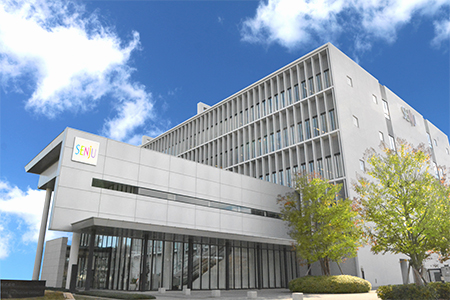
Senju Laboratory
The Kobe Innovative Center
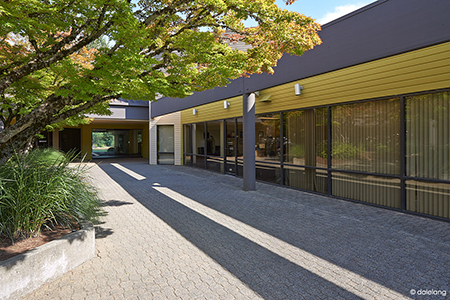
Laboratories of Oregon, U.S.
R&D Principles
Senju Pharmaceutical Co., Ltd. is engaged with the appropriate conducting of animal experiments carried out in the process of developing new pharmaceutical products. We are mindful of the welfare of laboratory animals and comply with the “Act on Welfare and Management of Animals”, “Standards Relating to the Care and Keeping and Reducing Pain of Laboratory Animals” (Ministry of the Environment), “Guidelines for Proper Conduct of Animal Experiments” (Science Council of Japan) and “Fundamental Guidelines for Proper Conduct of Animal Experiment and related Activities in institutions under the jurisdiction of the Ministry of Health, Labour and Welfare” (Ministry of Health, Labour and Welfare). We are establishing and improving our compliance and management system on an ongoing basis. To this end, we have adopted the institutional regulation*1 that govern our relevant activities and set up the Institutional Animal Care and Use Committee to carry out stringent vetting and monitoring of laboratory animal experiments. We administer education and training to our researchers regarding legislation, government guidelines as well as ethical issues relating to animal experiments.
Our guiding principle is that by optimizing laboratory conditions as well as experiment methods and technology, we can minimize animal stress and obtain reliable data. Based on this premise, we plan and implement animal experiments. We adhere to the 3Rs*2 and further added the fourth pillar of Responsibility, referring to the corporate responsibility that a pharmaceutical company should uphold. To check that these principles are followed and actions properly conducted, the Institutional Animal Care and Use Committee conducts a self-audit at least once a year aiming for further improvements. Our research facility, the Kobe Innovative Center, has been accredited by AAALAC International*3, an international accrediting third-party body, since November 2020(continued in 2023).
Replacement (switching to research that does not involve laboratory animal experiments)
Reduction (reducing the number of animals used in experiments)
Refinement (minimizing the pain and distress experienced by animals)
*3 A nonprofit international organization that promotes the humane treatment of animals in science through accreditation and assessment programs. The accreditation demonstrates our commitment to responsible animal care and use.
You are leaving the Senju Pharmaceutical website
Thank you for visiting Senju Pharmaceutical’s website. You are now leaving our website through a link to an external website, which is not within our control.